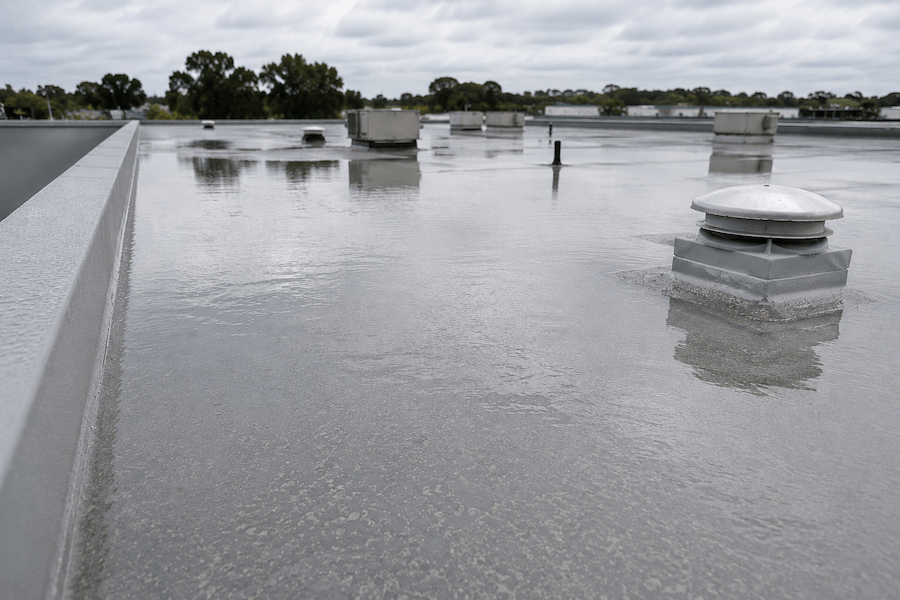
Waterproofing a roof that occasionally gets wet is one thing. Waterproofing an internal gutter or flat roof area where water continually collects is a much tougher job.
Ponding water places prolonged pressure on the coating or membrane beneath it. Products that perform well on pitched roofs may soften, blister, lose adhesion or eventually allow moisture through when they remain submerged for extended periods.
That is why areas where water cannot drain freely need a waterproofing system specifically designed to withstand continuous ponding.
Where ponding water commonly occurs
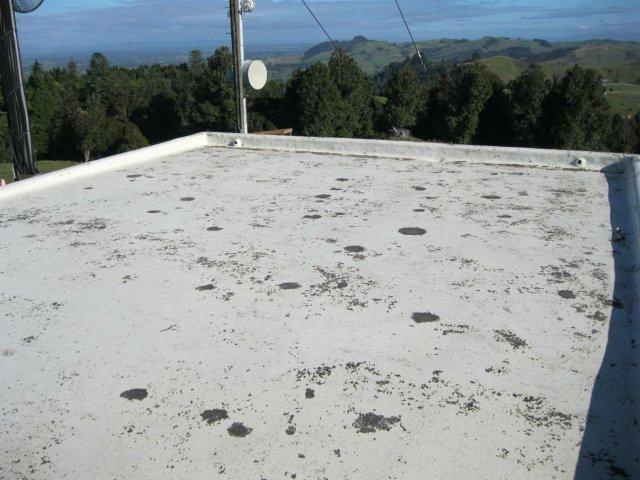
Standing water is frequently found in internal and box gutters, flat or low-pitched commercial roofs, roof areas with inadequate falls, plant decks and equipment platforms, around roof penetrations and drainage outlets, and on storage tanks, pipes and industrial cladding.
Even relatively shallow water can expose weaknesses in joints, laps, fastenings and ageing roof membranes. Once water gets beneath the surface, it can lead to corrosion, damaged insulation, internal leaks and expensive disruption.
Why some roof membranes fail
A conventional roof coating may be designed to shed rain rather than remain continually immersed in water. As the roof heats and cools, metal sheets, joints and other roofing materials expand and contract. A rigid or poorly adhered coating can crack or separate under this movement. Small defects then allow water to reach the substrate, where corrosion or further membrane deterioration can begin.
Internal gutters present an additional challenge because they often contain numerous joints, overlaps and difficult details. If one weak point fails, water may enter the building without being immediately visible from above.
A liquid membrane designed for continuous ponding
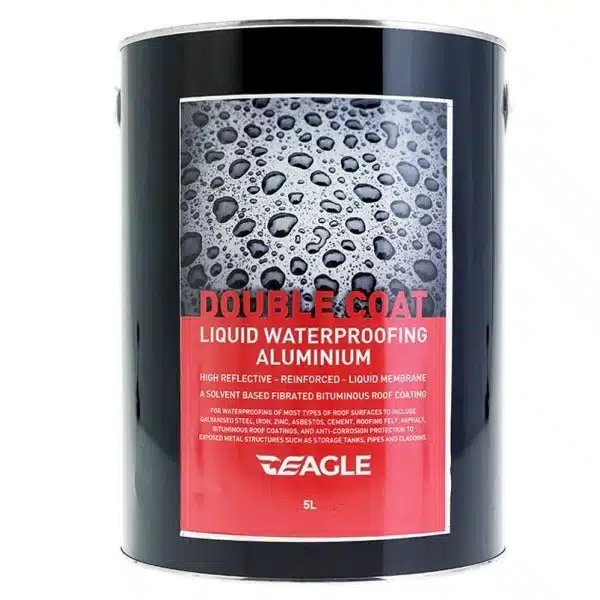
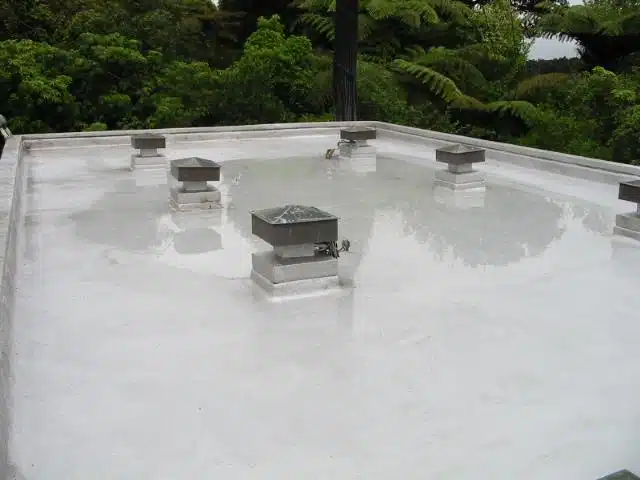
Eagle DoubleCoat Liquid Waterproofing Aluminium is a cold-applied elastomeric membrane developed for waterproofing areas exposed to continuous ponding water. It contains reinforcing microfibres and a high level of aluminium, creating a seamless, flexible membrane that provides both waterproofing and solar reflection.
Unlike systems that require several layers with reinforcement embedded between them, DoubleCoat is self-reinforced. On a sound, properly prepared surface, one correctly applied layer is normally adequate. The membrane remains elastomeric, allowing it to accommodate normal roof movement while bridging small holes, cracks and splits.
Suitable roof surfaces
Eagle DoubleCoat can be used on a wide range of properly prepared surfaces, including galvanised steel and iron, zinc, concrete and cement-based surfaces, asbestos-cement roofing, roofing felt, asphalt and existing bituminous roof coatings.
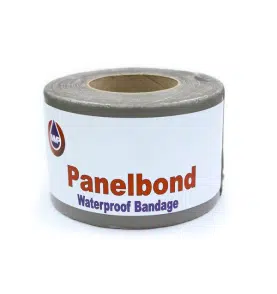
Porous materials, including asbestos-cement and some concrete surfaces, should first be treated with the recommended Eagle fast-drying primer. Roof laps, joints and other vulnerable details can be reinforced using MMP Panel Bond Bandage before the waterproofing membrane is applied.
Waterproofing with the added benefit of solar reflection
The aluminium content gives DoubleCoat a highly reflective finish. By reflecting more solar heat away from the roof, it can help reduce heat entering the building. Depending on the building, roof area and operating conditions, this may contribute to energy savings of up to approximately 30%.
This makes the system particularly useful for warehouses, factories, plant rooms and other commercial buildings where roof heat contributes to uncomfortable internal temperatures or increased cooling costs.
Faster application and easier maintenance
DoubleCoat is applied by brush or suitable spray equipment. Its self-reinforcing microfibres reduce the need for the multi-stage application required by some reinforced membrane systems.
The typical application rate is up to 2 m² per litre on smooth, even surfaces, approximately 1 m² per litre on rough or uneven surfaces, and no more than 7 m² from a 5-litre tin. At 2 m² per litre, the approximate dry-film thickness is 0.3 mm.
Drying time varies with temperature, humidity and general weather conditions. DoubleCoat should not be applied during wet weather, when rain is expected or when conditions will prevent proper drying. If the membrane is later damaged during maintenance or other roof work, the affected area can generally be cleaned, prepared and patched with additional DoubleCoat.
Surface preparation remains critical
No waterproofing product can compensate for poor preparation. Before applying DoubleCoat, the surface must be clean, dry and free from dust, rust scale and loose material. Fungi and algae should be removed with a stiff-bristled brush or low-pressure water jet, followed by an appropriate fungicidal treatment.
Newly applied underlying coatings should normally be allowed to weather for two weeks before DoubleCoat is applied. The product must also be stirred thoroughly so that any aluminium or other material settled at the bottom of the tin is fully incorporated. A trial area is recommended before proceeding with the complete application.
Proven on demanding New Zealand roofs
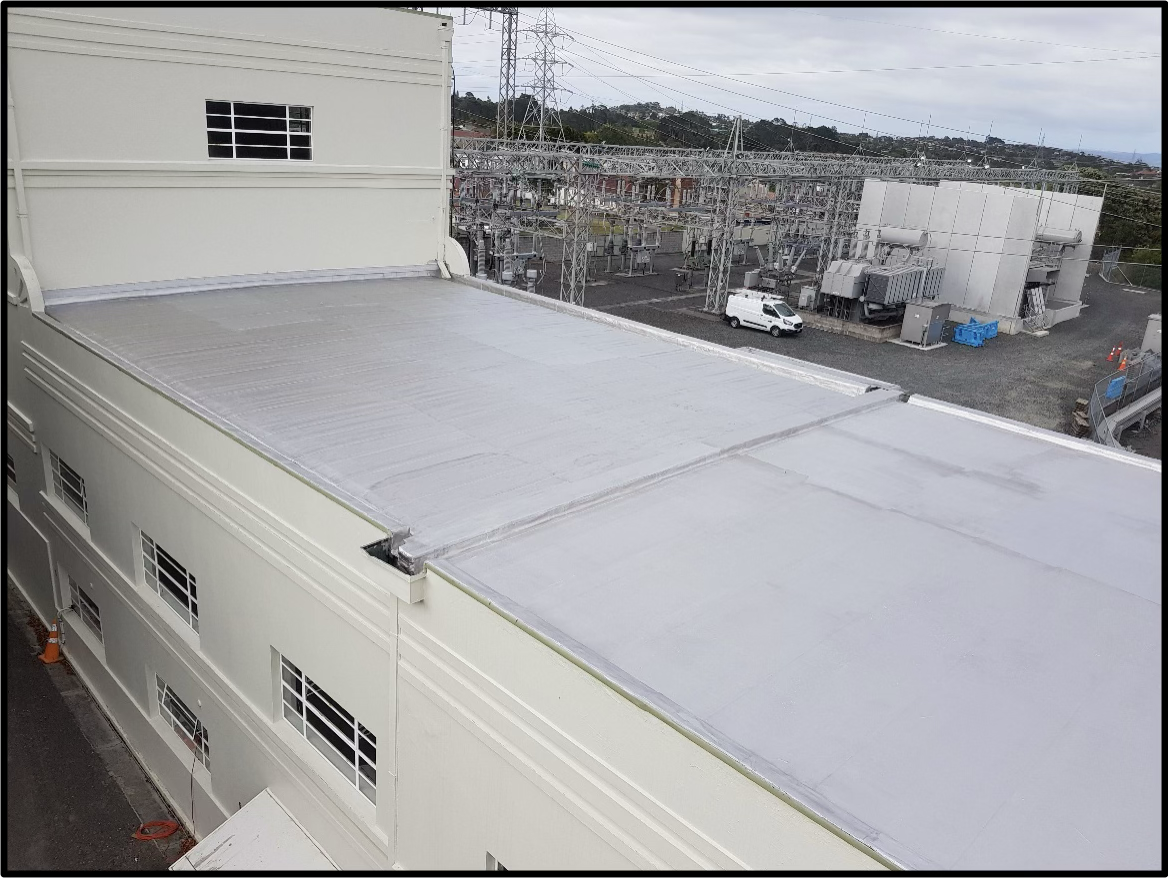
Eagle DoubleCoat has been used on New Zealand projects where ordinary waterproofing systems would face demanding conditions. These include the Spark Building in Waitākere, where a seamless membrane was applied to a flat concrete roof in a high-rainfall environment, and a Transpower substation roof affected by flat-roof detailing and ponding water.
The product is also suited to aggressive industrial environments, including chemical and dairy facilities, where resistance to acid rain and chemical attack may be required.
Choosing the right waterproofing specification
Ponding water should never be treated as an ordinary roof-painting job. The existing substrate, condition of the roof, joints, drainage, previous coatings and expected service environment all influence the correct specification.
Eagle DoubleCoat is available with conditional product-performance guarantees starting from 10 years, subject to the specified preparation, application method and system requirements. Reinforced systems may qualify for longer guarantee periods.
Before starting, talk to MMP Coatings about the roof and the conditions involved. We can help determine the appropriate preparation, primers, detailing products and application rate — and provide a written specification, technical data sheet and safety data sheet.
Contact us for more information
Talk to David King about your roof, pool, corrosion, waterproofing or flooring project — and the right coating for the job.